Thursday, May 22nd, 2014
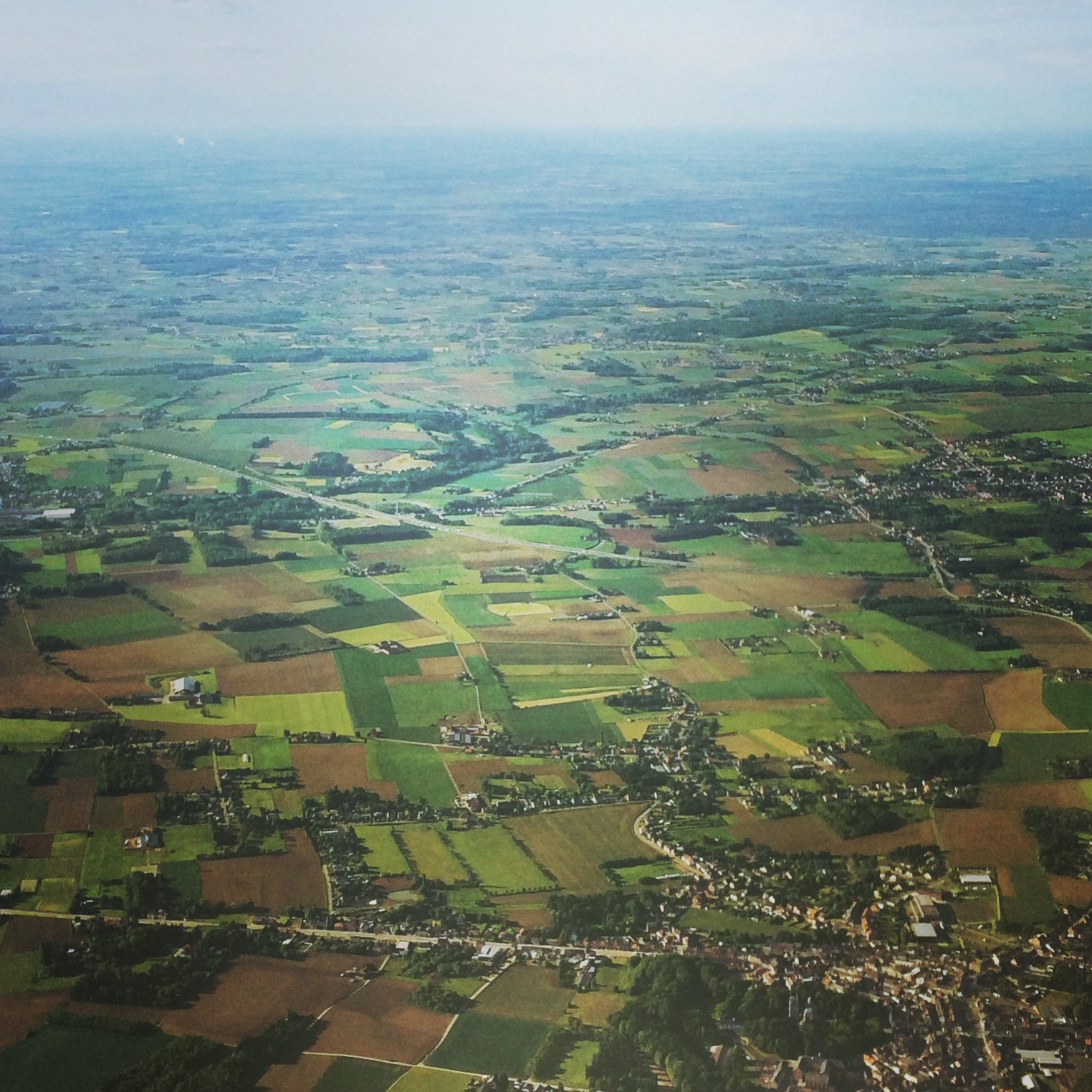
I read recently that if you added up all of the land in the world that has been cleared for crops it would add up to a piece of land roughly the size of South America.
Thursday, May 22nd, 2014
I read recently that if you added up all of the land in the world that has been cleared for crops it would add up to a piece of land roughly the size of South America.
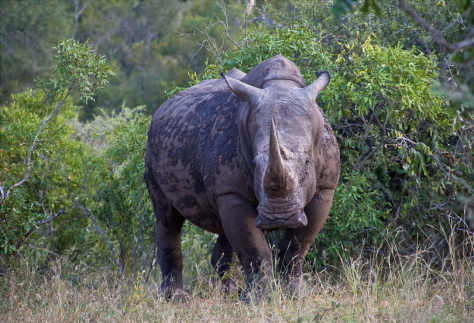
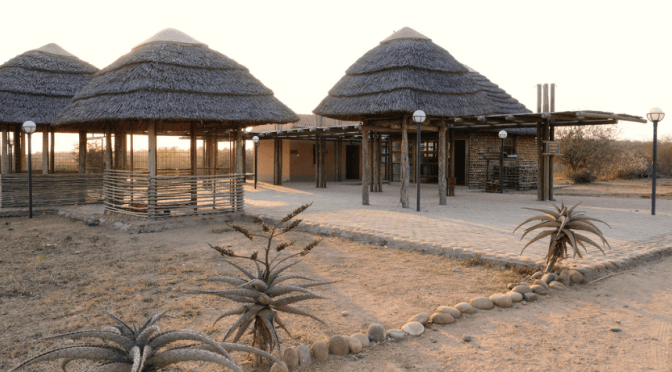
The Great Limpopo Transfrontier Park is one of the largest national parks in the world and one of the few national parks that actually covers multiple countries. This was in hopes to create a protected migration path for a variety of the species found in this park. So lets learn a little bit more about this amazing park.
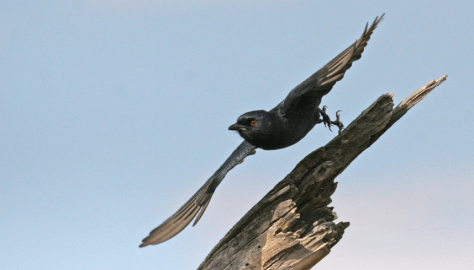
Did you know that the Drongo, a small bird that lives in the Kalahari desert has been observed crying wolf? That’s right. The Drongo actually calls out false alarm calls to drive away competition. Sounds that are usually reserved for seeing predators are being used to scare off other birds and cause them to drop whatever juicy insect they’ve got their claws on!
It’s been a while but it is time for another Odd Animal Profile! If you haven’t been around on the site long check out some of our other OAP’s like the oh so popular okapi or maybe you’re in the mood to learn about the sunda flying lemur? Oh I do love animals called “flying” that can’t actually fly! Why don’t they just call this amphibian the gliding frog? Or the frog that can jump extremely long distances? Well, I guess it’s because it’s quite a mouthful, so flying frog it is!

Education is key to conservation. I think that this is an incredible message worth sharing. It is what I aim to do every time I post on endangeredliving.com, our FB page or my twitter. I want to educate people and teach them about species they may never have heard of, so that they can care. You have to know something exists and that it is in trouble to be able to want it to help it. It is such a basic idea that can get over looked.
So I encourage you to share this photo, to remind people how important it is to learn every day. Keep an open mind and it can lead to a great idea that might just change the world.

Want to see some amazing animals that can be found in the Florida Keys? Click through the photo slideshow! Want to see a less informational, more fun video of my time in the Florida Keys? That’s down at the bottom. Enjoy!
A little while back I was working on a paper for a linguistic anthropology class and I reached out to some zoo keepers on Facebook to ask them what some terms were that applied (or had meanings specifically) to zoo keeping. These are some of the terms that they came up with! I provided the definitions. Now keep in mind that every zoo does things just a little bit differently, so don’t be offended if a definition is different from one you may use, just leave it in the comments!
Indonesian Ministry of Forestry, Zulkifli Hasan has stated in a press conference on April 1st that all urban areas on the island of Borneo will be shut down. The reason for this sudden stop of not only the expansion of metropolitan areas, but also to their existence is the Indonesian government’s recent plan to evacuate all citizens currently residing in Indonesian Borneo.

The southern ground hornbill is the largest species of hornbill bird and can be found naturally across the savannas of Africa. These birds are listed as vulnerable, according to the IUCN Red List, but studies done in South Africa suggest they could be in much worse trouble than scientists previously thought. Their habitat is being cleared for farmland and these birds are dying off.

A map of me; exactly what the title says. It’s where I’ve been, where I’m going and where I want to be in my career as a conservationist and budding primatologist. It’s not been easy because I feel like I”m forging ahead on this path completely alone. I am the only primatology student at my undergraduate institution and I am the first in my family to go to college. When I started this journey I knew I had to create this site for a few reasons. Firstly, my love of writing and education. Secondly? I know how hard it is to do with no possible clue on where to go next and that is a terrifying feeling. So, for any young, budding primatologists, if you want to know how I got to where I am or where I’m going, this is for you.

Green: Field sites I’ve been to
Purple: Education
Red: Home
Yellow: Goal
Click on the picture to visit my interactive map!


 Endangered Living