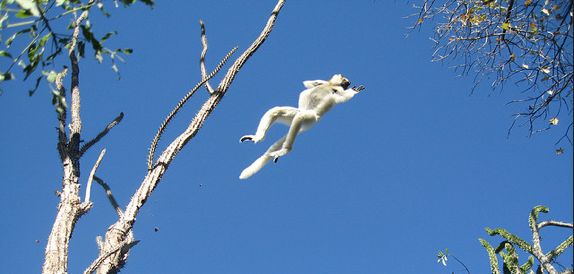
Primates in the family Indriidae are also found on the island of Madagascar, but these primates are a bit different from the lemurs we have been talking about so far. The species included in the family indriidae are indris, sifakas, and woolly lemurs. Although I said they were different they still share several commonalities like the fact that indriids are not monkeys, but also lemurs, they are also strepsirrhines who have wet noses, and are diurnal.
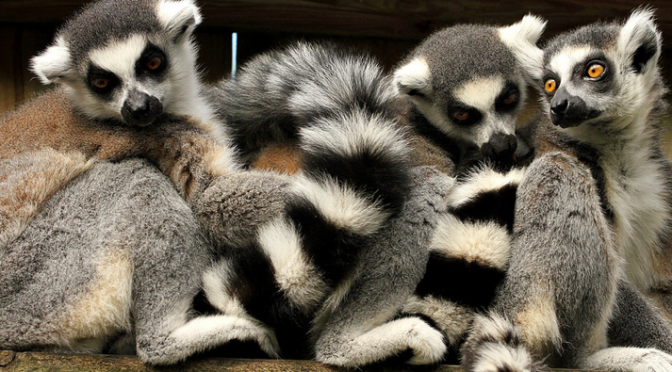
Lemuridae is another large family of primates, just like cercopithecidae, as it includes most species of lemur. I mentioned in my last primate families post that all lemurs are found on the island of Madagascar, but something that differs from the cheirogaleidae is that lemurids are diurnal. Diurnal means that they spend most of their time awake during the daylight hours.
We have finally arrived at the smallest primates in the world. The members of the cheriogalidae family include mouse and dwarf lemurs. Now, all lemurs are found on the island of Madagascar, which is off the eastern coast of Africa. Cheriogalids are both nocturnal and live their entire lives in the trees.
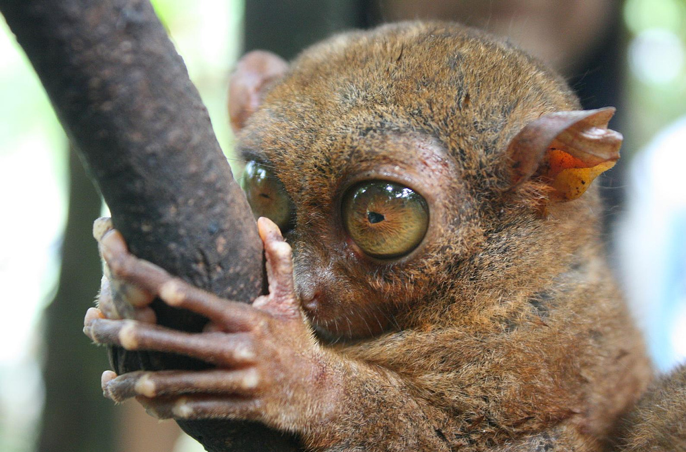
The tarsiers of the tarsiidae family are small primates with enormous eyes. Those enormous eyes help them to see in the dark, which is particularly useful when you are a nocturnal primate. These are such odd looking animals with their tiny bodies, only about 15 cm in length and their long, bald, tails, which are about 25 cm in length.
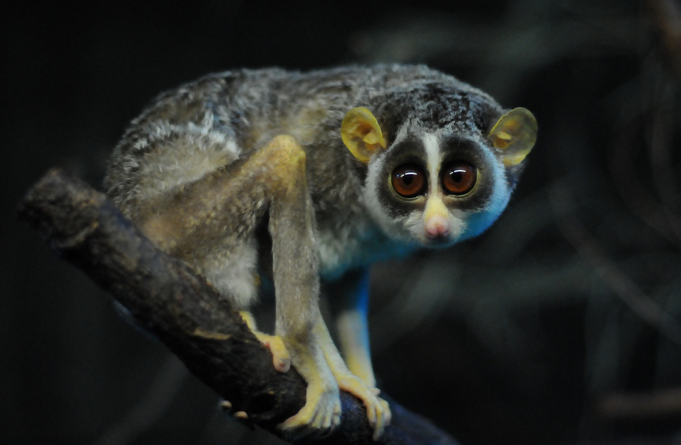
I have the extreme pleasure that I get to learn all about the lorisidae family by a well-known expert on one of the species in the family. Species within the lorisidae family include lorises, pottos and angwantibos. These primates are a little different than the families I have been talking about recently. I was mostly discussing catarrhines and now we have officially moved on to strepsirrhines. Remember what I said about catarrhines, strepsirrhines, and platyrrhines? No? That’s okay! They are words that refer to different groups of primates, mostly based on their noses, of all things! Strepsirrhines, like those species found in lorisidae have wet noses, like your dog or cat at home, rather than dry noses like we have.
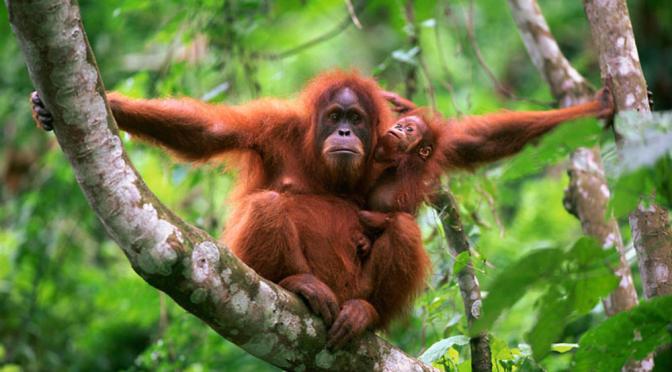
If I had to pick a favorite family of primates it would hands-down be pongidae. This family is going to include all of the great apes, except humans, because we like to think we are special when in reality we really just aren’t. Pongidae are true great apes. These primate have no tails, no claws (just nails), flat noses, and incredible amounts of tool use.
Wow! Cercopithecidae a HUGE primate family! It includes almost all Old World Monkeys. If you need a refresher on what “Old World” means, it means that these monkeys are basically from anywhere that is not South America. Now I did oscillate between splitting this into it’s subfamilies, as some people recognize them as different families, but in the end I decided to put colobinae under cercopithecidae.
Alright!! As many readers may know I am currently working towards my masters in primate conservation, what many of you may not know is that tomorrow I have an exam where I have to memorize all of the taxonomic families of primates. I am also not great at studying, which you can probably tell by the simple fact I am writing this when I have an exam tomorrow. But I was thinking, you know what? I learn and retain a LOT when I write species specific blog posts. I tend to have to do a decent amount of research and always double check my facts before posting, and because I love writing to all of you so much, it’s really quite fun! So, I will write up a blog post for every family of primates. They will not all be posted tonight because that would be a bit overwhelming for everyone involved, but we are embarking on a journey! Let us begin!
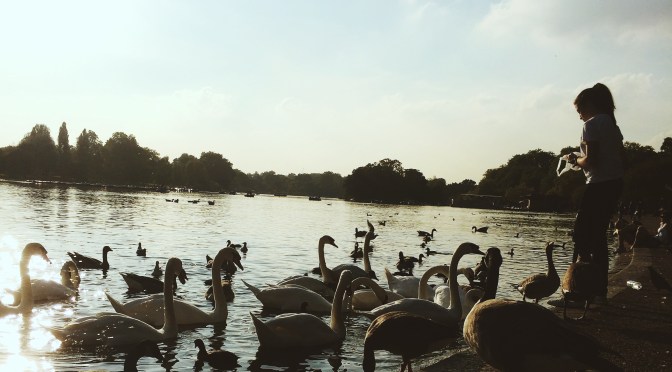
We’ve all been to the park and watched people pull that plastic bag of old bread out of their purse and start throwing pieces to the ducks, swans, geese or what-have-you. Maybe you have been the person feeding those lovely little waterfowl. But is that really the wisest decision?
Girl feeding swans in Hyde Park, London Photo by Sarah Bell
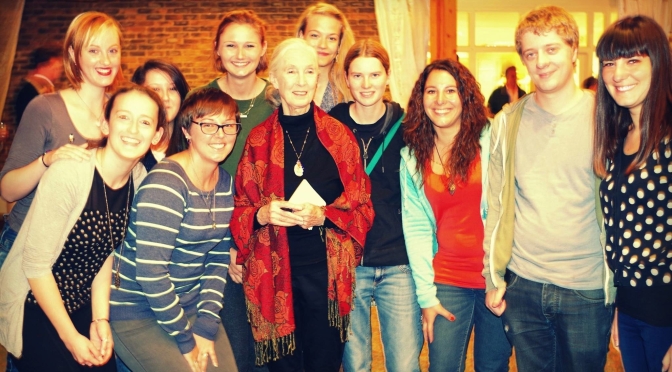
Forward: This is a long post, but it is my hope that you will make it to the end. Getting the chance to meet someone as inspiring as Jane Goodall is an experience I could not limit to a few hundred words. And although this is a post that may not introduce to you a new species or a conservation crisis, I think that it can introduce you to hope if you will let it.
I arrived exactly one hour early. I stood and watched the meerkats outside of the Woburn Safari Park’s Safari Lodge, biding my time until the doors opened and I could find my seat. Even before seeing Jane Goodall standing a mere 10 feet from me the day was perfect. I had seen my first ever wild pheasant, which could seem silly to many people, but for me it was incredibly exciting. Even the mundane turns magical on the day you get to meet your life-long hero.







 Endangered Living