Current PhD candidate studying the effects of the 2014-2016 Ebola epidemic in Sierra Leone, including investigating any cultural changes that may have happened due to the epidemic and how these changes effect wildlife and the environment.
Sometimes I am in the U.K. and sometimes I am in Sierra Leone.
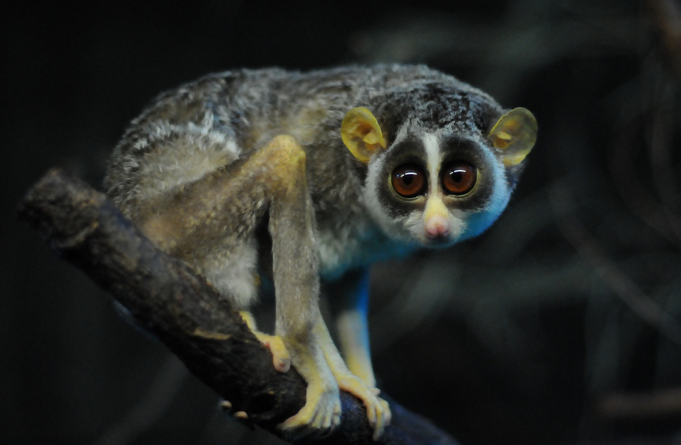
I have the extreme pleasure that I get to learn all about the lorisidae family by a well-known expert on one of the species in the family. Species within the lorisidae family include lorises, pottos and angwantibos. These primates are a little different than the families I have been talking about recently. I was mostly discussing catarrhines and now we have officially moved on to strepsirrhines. Remember what I said about catarrhines, strepsirrhines, and platyrrhines? No? That’s okay! They are words that refer to different groups of primates, mostly based on their noses, of all things! Strepsirrhines, like those species found in lorisidae have wet noses, like your dog or cat at home, rather than dry noses like we have.
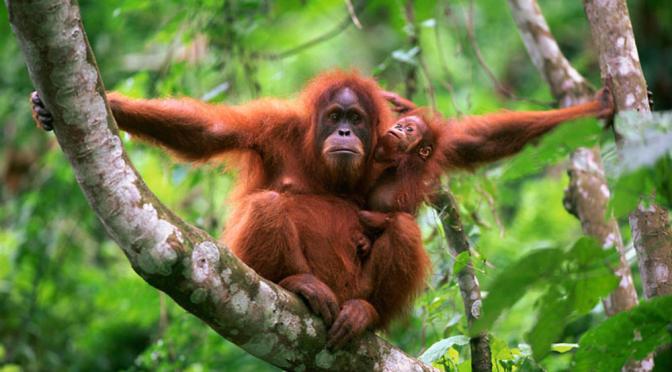
If I had to pick a favorite family of primates it would hands-down be pongidae. This family is going to include all of the great apes, except humans, because we like to think we are special when in reality we really just aren’t. Pongidae are true great apes. These primate have no tails, no claws (just nails), flat noses, and incredible amounts of tool use.
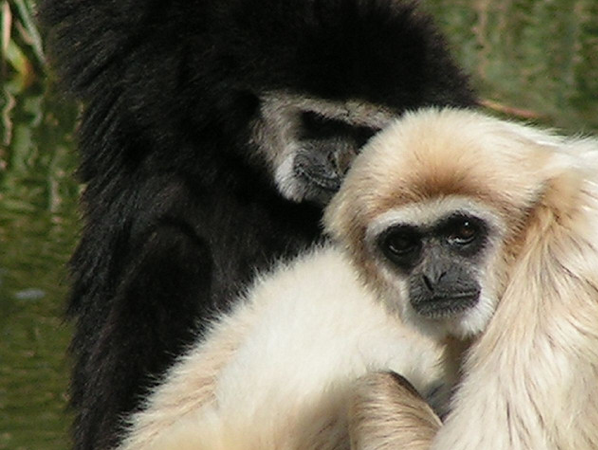
Wow! Cercopithecidae a HUGE primate family! It includes almost all Old World Monkeys. If you need a refresher on what “Old World” means, it means that these monkeys are basically from anywhere that is not South America. Now I did oscillate between splitting this into it’s subfamilies, as some people recognize them as different families, but in the end I decided to put colobinae under cercopithecidae.
Alright!! As many readers may know I am currently working towards my masters in primate conservation, what many of you may not know is that tomorrow I have an exam where I have to memorize all of the taxonomic families of primates. I am also not great at studying, which you can probably tell by the simple fact I am writing this when I have an exam tomorrow. But I was thinking, you know what? I learn and retain a LOT when I write species specific blog posts. I tend to have to do a decent amount of research and always double check my facts before posting, and because I love writing to all of you so much, it’s really quite fun! So, I will write up a blog post for every family of primates. They will not all be posted tonight because that would be a bit overwhelming for everyone involved, but we are embarking on a journey! Let us begin!
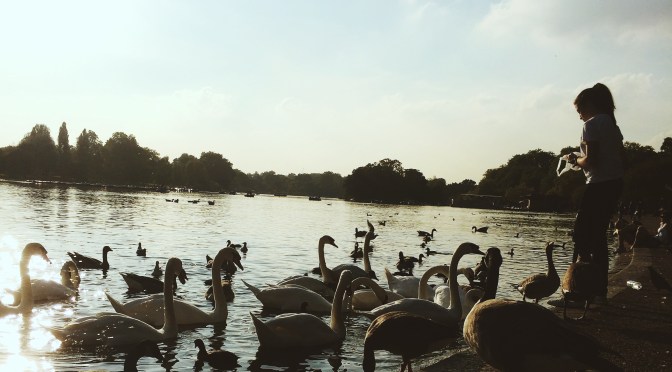
We’ve all been to the park and watched people pull that plastic bag of old bread out of their purse and start throwing pieces to the ducks, swans, geese or what-have-you. Maybe you have been the person feeding those lovely little waterfowl. But is that really the wisest decision?
Girl feeding swans in Hyde Park, London Photo by Sarah Bell
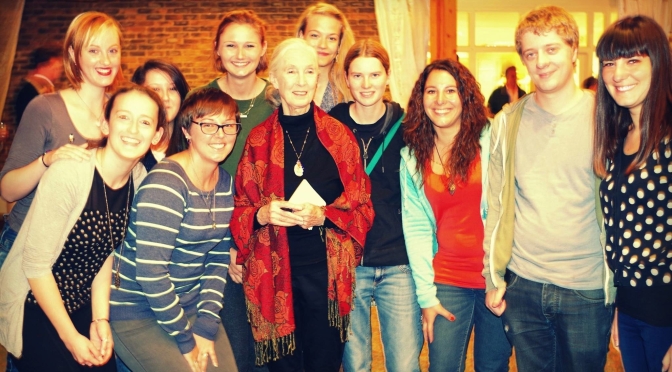
Forward: This is a long post, but it is my hope that you will make it to the end. Getting the chance to meet someone as inspiring as Jane Goodall is an experience I could not limit to a few hundred words. And although this is a post that may not introduce to you a new species or a conservation crisis, I think that it can introduce you to hope if you will let it.
I arrived exactly one hour early. I stood and watched the meerkats outside of the Woburn Safari Park’s Safari Lodge, biding my time until the doors opened and I could find my seat. Even before seeing Jane Goodall standing a mere 10 feet from me the day was perfect. I had seen my first ever wild pheasant, which could seem silly to many people, but for me it was incredibly exciting. Even the mundane turns magical on the day you get to meet your life-long hero.
Since the early 1200’s the Tower of London has been home to more than monarchs, lords and prisoners. Keeping exotic animals at the tower became a tradition started by King John in 1210. Everything from lions to tigers to bears, oh my, have been kept in and around the tower grounds. Today not much remains of the fantastic menagerie except a few trained crows and metal statues where the real beasts once stood, but the stone walls pulse with the history that they have seen.
I am so incredibly sorry for my absence these past few weeks. I’ve (sort of.. long story for another time) moved to Oxford and I have had little time (or wifi) these past few weeks. But on the bright side I got the chance to visit the Bird of Prey Centre in Loch Lomond, Scotland. It was a trip that happened a bit by accident, but I am so glad that I got to visit such a beautiful place and find such an incredible centre.
One of the few animals I saw on a regular basis while in Sierra Leone was the Great Blue Turaco. The first time I was told by Papanie that the giant blue bird that flew overhead was a turaco I was shocked. The turaco I had worked with in Dallas had barely been half that size! But the more I saw them the more resemblance I saw to Marty, my Dallas-dwelling turaco. So in honor of the Great Blue Turaco and the amazing wildlife of Sierra Leone, lets have them be the next focus for an Odd Animal Profile.
Photo by Nathan Rupert
Corythaeola cristata. I don’t normally include the scientific names in my O.A.P.s but Corythaeola crostata rolls off of the tongue with such grace. It is a name that couldn’t belong to any other animal than this giant, blue bird. Continue reading OAP: Great Blue Turaco→





 Endangered Living